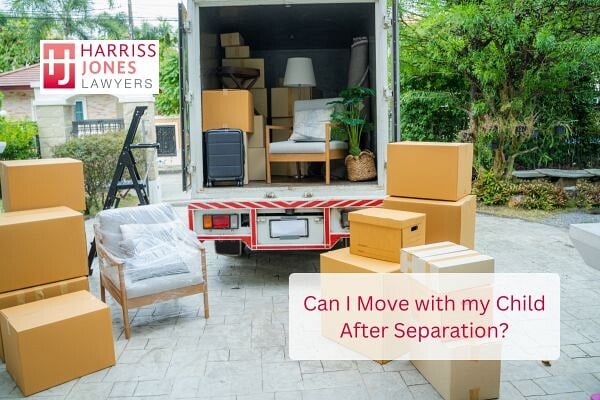
Can I relocate after separation? Can I move interstate with my child? Do I need permission to move or travel with my child? Here's what you need to know.
If you've separated from your child's other parent and you're thinking about moving, you may be wondering whether you can take your child with you.
The answer depends on your circumstances. If the move will affect the time your child spends with the other parent, you may need their agreement or permission from the Court.
The most important thing to know is that the Court will always make decisions based on what is in the best interests of the child.
What is relocation?
Relocation simply means moving with your child to another place in a way that affects their living arrangements or the time they spend with the other parent.
This could include moving:
to another suburb;
to a regional area;
interstate; or
overseas.
Even a move within the same city can be considered relocation if it makes it harder for the other parent to spend time with the child.
Do I need the other parent's agreement?
If your move will affect your child's current parenting arrangements, you should talk to the other parent first.
Many parents are able to reach an agreement by changing the parenting schedule. For example, if regular weekend visits are no longer possible, the child may spend more time with the other parent during school holidays.
If you reach an agreement, it is a good idea to have it recorded properly so everyone knows what has been agreed.
What if we can't agree?
If you can't agree, you may need to ask the Court to decide.
Before going to Court, parents usually need to try family dispute resolution (mediation), unless an exception applies, such as family violence or an urgent situation.
The Court will look at all of the circumstances before deciding whether the child should relocate.
How does the Court decide?
There is no rule that says a parent can or cannot move.
Instead, the Court looks at what is best for the child.
Some of the things the Court may consider include:
the child's safety and wellbeing;
the child's relationship with each parent;
how the move will affect the child's schooling and daily life;
how the child will spend time with the other parent if the move goes ahead; and
whether the proposed arrangements are practical.
Every family is different, so each case is decided on its own facts.
Can I move without permission?
It is risky to move with your child without the other parent's agreement or a Court order.
If you relocate without permission, the Court may order you to return with the child while the case is being decided.
If there are already parenting orders in place, moving without following those orders could mean you have breached them, which can have serious legal consequences.
Can I take my child overseas?
Taking a child overseas is different from travelling within Australia.
If there are parenting orders in place, or parenting proceedings have started, you usually need:
the written agreement of everyone involved; or
a Court order allowing the trip.
If there are concerns that a child may not be returned to Australia, the Court can make orders to help prevent the child from leaving the country.
What about passports?
In most cases, everyone with parental responsibility must agree before an Australian passport can be issued for a child.
If someone is worried that a child may be taken overseas without permission, there are legal steps that may help, including asking the Court to make orders about the child's passport or requesting that the child's name be placed on the Family Law Watchlist.
What is the Hague Convention?
The Hague Convention is an international agreement that helps when a child has been taken to another country without permission.
If it applies, it may be possible to ask for the child to be returned to their home country so parenting issues can be dealt with Family Court in Australia.
Getting legal advice
Every family's situation is different.
If you are thinking about relocating with your child—or the other parent wants to move—it is a good idea to get legal advice as early as possible.
Getting advice before making plans can help you understand your rights, avoid legal problems and focus on what is best for your child.
This article is general information only and does not constitute legal advice. Every family's situation is different, if you need assistance, contact our office to arrange a consultation.